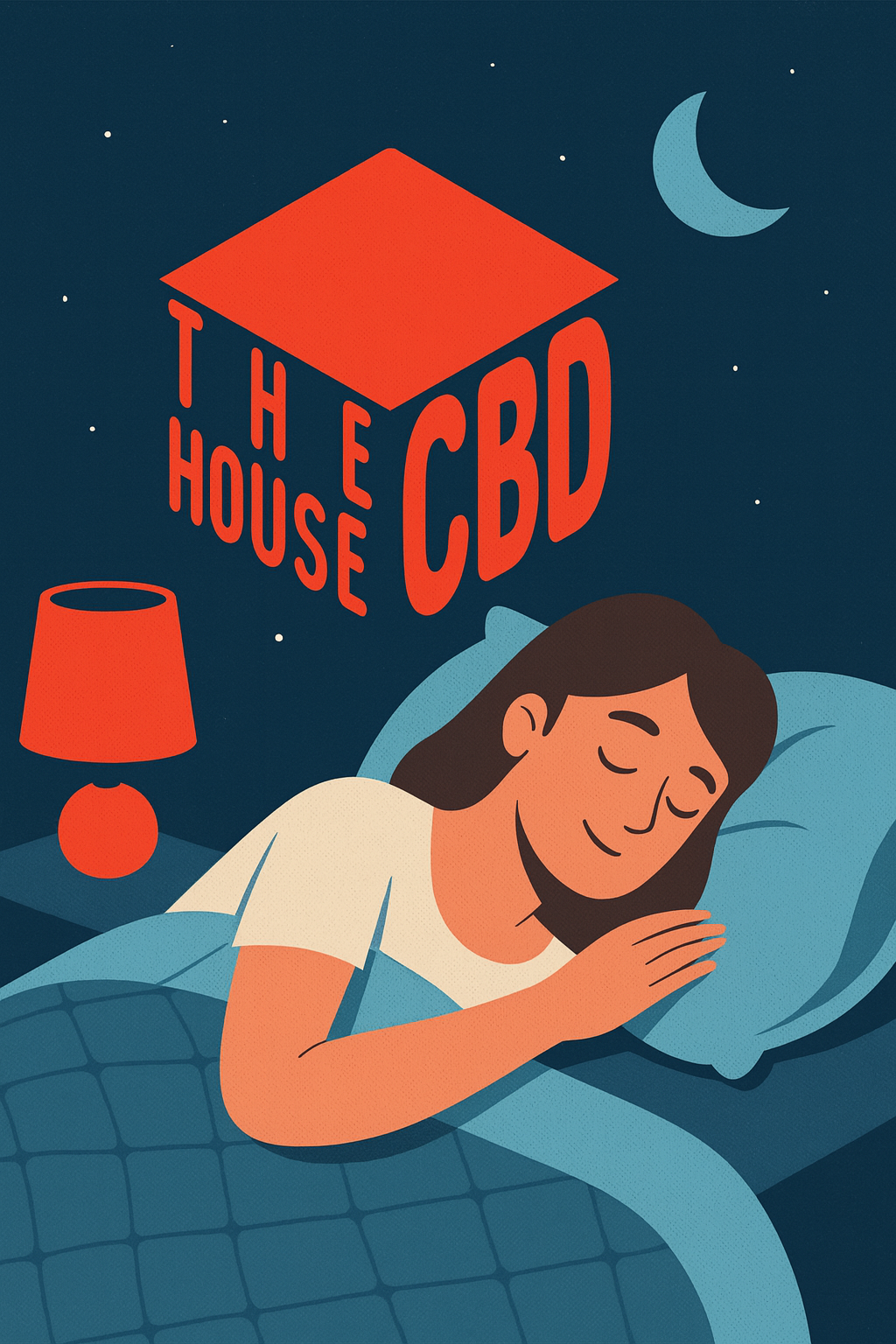
How CBD Transforms Your Sleep: The Ultimate Guide
Sleep takes up a third of our lives. Yet millions of people struggle to get the rest they deserve. Daily stress, nighttime rumination, accumulated tension: the obstacles to good rest are multiplying. In this context, CBD is gradually becoming part of the evening routines of many Swiss people.
At The House CBD, we receive questions every day about the link between cannabidiol and sleep. This guide explores this relationship with honesty. No miracle promises. Just a clear perspective on what CBD can bring to your evening ritual.
Understanding CBD: The Basics
What is cannabidiol?
Cannabidiol (CBD) is a natural compound found in hemp. This molecule is part of the cannabinoid family. More than 100 different cannabinoids coexist in the cannabis plant. CBD and THC are the most widely studied.
La différence fondamentale ? Le THC provoque des effets psychoactifs. Il altère la perception et peut créer une dépendance. Le CBD, lui, ne « fait pas planer ». Aucun effet psychotrope. Aucune accoutumance documentée scientifiquement.
In Switzerland, legislation allows products containing less than 1% THC. This limit makes it possible to enjoy CBD legally. The clarity of the Swiss legal framework facilitates access to quality-controlled products.
The endocannabinoid system: this little-known network
Our bodies naturally produce cannabinoids. The endocannabinoid system (ECS) helps regulate many functions. Mood, appetite, sensory perception, immune response: its scope is vast.
This system includes CB1 and CB2 receptors. CB1 receptors are mainly concentrated in the brain and central nervous system. CB2 receptors are found primarily in the immune system and peripheral tissues.
CBD interacts with this system in a subtle way. Unlike THC, which binds directly to receptors, CBD modulates their activity indirectly. This gentler action explains its different effect profile.
Sleep: a delicate balance
The architecture of a night
A night's sleep consists of several successive cycles. Each cycle lasts approximately 90 minutes and includes different phases:
Light sleep: The transition between wakefulness and sleep. Muscles gradually relax. Consciousness fades.
Deep sleep: The phase during which the body regenerates. Tissues repair themselves. Energy is replenished.
Rapid eye movement (REM) sleep: The time when we dream. Brain activity intensifies. Memories are consolidated.
The balance between these phases determines the quality of rest. Restorative sleep requires sufficient time spent in deep and REM sleep.
Disturbers of a good night's sleep
Several factors can disturb our sleep:
Stress keeps the body in a state of alert. Cortisol levels remain high. Relaxation becomes difficult. Falling asleep takes longer.
Rumination occupies the mind. Thoughts go round and round in circles. The mind refuses to let go. Nighttime awakenings become more frequent.
Physical tension prevents complete relaxation. Every position becomes uncomfortable. Sleep remains superficial.
Screens emit intense blue light. This light disrupts the natural production of melatonin. The biological clock becomes disrupted.
CBD and sleep: the current state of knowledge
Promising exploratory research
Research on CBD has progressed rapidly in recent years. The results are encouraging but not definitive. The scientific community maintains a cautious approach.
A study published in The Permanente Journal in 2019 observed 72 participants. After one month, 66.7% reported improved sleep. 79.2% noted a decrease in their feelings of anxiety.
A large American study conducted by Radicle Science in 2022 surveyed 3,000 volunteer participants. The methodology included randomized double-blind trials. 61% of respondents reported an improvement in their sleep experience.
More recent research from 2024 suggests that CBD may influence deep sleep and REM sleep phases. These phases are considered particularly restorative.
The current limits of science
The French National Institute of Health and Medical Research (Inserm) highlights methodological limitations. Large-scale clinical trials remain rare. Many studies are based on limited samples.
CBD appears to have a biphasic effect. At low doses, it may have a stimulating effect. At higher doses, it promotes relaxation. This characteristic complicates the definition of a universal dosage.
Funded studies remain few and far between. Since CBD itself cannot be patented, pharmaceutical companies are investing modestly in research.
The current scientific consensus
Researchers agree on several observations. CBD has interesting exploratory potential. Its interaction with the endocannabinoid system has been documented. Creating a state of relaxation could indirectly facilitate falling asleep.
The update on CBD from Geneva University Hospitals confirms this measured approach. In Switzerland, CBD is considered a wellness product, not a sleep treatment.
How CBD fits into an evening routine
Promote a state of relaxation
Chronic stress keeps the body in a constant state of alert. Muscle tension persists. Mental relaxation becomes difficult to achieve.
Many users report feeling calm after consuming CBD. Thoughts slow down. The mind gradually accepts to let go. This atmosphere of calm creates conditions conducive to rest.
CBD acts on certain receptors involved in mood regulation. This interaction modulates the general state of tension or relaxation.
Create an atmosphere conducive to rest
A relaxed body naturally makes it easier to fall asleep. Muscle tension accumulated during the day often keeps you awake.
Some testimonials mention a feeling of increased physical comfort after taking CBD. Muscles relax more easily. Lying down becomes more comfortable. Micro-awakenings linked to discomfort decrease.
This feeling of physical well-being is a useful complement to other evening relaxation practices.
Accompanying the natural rhythm
Our biological clock orchestrates our sleep-wake cycle. The endocannabinoid system may play a role in this natural regulation.
CBD could therefore be involved in the biological mechanisms that prepare the body for rest. Not as a sleeping pill, but as an element that is part of the natural process of falling asleep.
The different forms of CBD for your evening ritual
CBD oils: the most common method
Oil remains the preferred format for many users. Its use is intuitive. The dosage is easy to control.
Sublingual administration: Place a few drops under the tongue. Allow 60 to 90 seconds before swallowing. The oral mucosa absorbs CBD quickly. The first effects may appear within 15 to 30 minutes.
Gradual approach: Start modestly. 10 to 20 mg of CBD is a reasonable starting point. Increase gradually if necessary after a week of observation. Listen to your body's signals.
Full spectrum oils contain all of the natural cannabinoids found in hemp. The entourage effect created by this molecular synergy could optimize results. CBN in particular is often associated with evening rituals.
Hemp infusions and herbal teas
CBD herbal teas create a truly soothing ritual. The preparation itself becomes a moment of pause. Hot water gradually extracts the cannabinoids and aromatic terpenes.
Optimal preparation: CBD is fat-soluble, meaning it dissolves in fats. Add whole milk, coconut oil, or a little butter to your infusion. This step is essential for effective extraction.
Ideal timing: Prepare your herbal tea 60 to 90 minutes before bedtime. Absorption through the digestive tract takes longer than sublingual absorption. The effect sets in gradually and generally lasts longer.
Herbal teas often combine CBD with plants traditionally associated with relaxation. Chamomile, verbena, lemon balm, linden: these botanical allies enhance the soothing atmosphere of the ritual. Our comprehensive article on CBD in herbal tea details all the preparation techniques.
CBD flowers for vaporizing
Vaporization preserves the integrity of delicate terpenes. These aromatic molecules contribute to the overall sensory experience. The olfactory profile is greatly enriched.
Recommended temperature: Heat between 160 and 180°C. This range prevents combustion. Cannabinoids and terpenes are released without generating combustion byproducts.
Rapid onset: Inhalation offers high bioavailability. Effects can be felt within minutes. This rapid onset is suitable for people seeking a more immediate effect.
Choose varieties rich in myrcene and linalool. These terpenes are traditionally associated with moments of relaxation.
Capsules and gel capsules
Capsules greatly simplify dosing. Each unit contains a precise and consistent amount. Absorption is slow and gradual.
Practicality: No specific taste. No preparation required. Ideal format for active people or those who are frequently on the move.
Gradual release: Some capsules use controlled-release technologies. The effect lasts for several hours. Support throughout the night is optimized.
Create a complete sleep routine with CBD
The importance of regular ritual
The brain functions through associations and habits. A consistent evening ritual gradually signals that it is time to rest. The body and mind naturally prepare for the transition.
Regularity: Consume your CBD at relatively fixed times. 60 to 90 minutes before bedtime is generally a good time. Consistency reinforces the effectiveness of the overall ritual.
Set the mood: Gradually dim the lights. Turn off screens at least an hour beforehand. Create a soothing atmosphere. CBD fits harmoniously into this relaxing setting.
Complementary practices
CBD gains interest when it is part of a comprehensive approach:
Conscious breathing: A few minutes of deep, controlled breathing enhances overall relaxation. Optimal oxygenation contributes to well-being.
Light meditation: Five to ten minutes is enough. The mind gradually frees itself from distracting thoughts. CBD can support this mental calmness.
Peaceful reading: Forget thrilling novels. Opt for gentle, neutral content. The brain naturally slips into a state conducive to sleep.
Cool temperature: A room temperature of 18-19°C promotes natural sleep. The body lowers its temperature to sleep. Facilitate this physiological process.
CBD and sports: a winning combination
Regular physical activity is known to promote quality sleep. CBD could help athletes recover.
Our article on CBD and sports explores this synergy. Easier recovery allows for potentially deeper rest. Reduced muscle discomfort makes it easier to fall asleep.
Be mindful of timing. Avoid intense exercise less than 3 hours before bedtime. Physiological activation may counteract the desired calming effects.
Dosage and timing: finding your personal balance
There is no universal formula.
Each body reacts differently to CBD. Weight, metabolism, personal sensitivity, and history of use all influence the experience.
Recommended gradual approach: Start with 10 to 20 mg of CBD. Maintain this dosage for a full week. Carefully observe the effects you experience.
Gradual adjustments: If you feel the effect is still insufficient, increase the dose by 5 to 10 mg. Always wait a few days between each adjustment. Patience yields better results than rushing.
Saturation threshold: Beyond a certain amount, perceived effectiveness generally does not increase. Finding your personal optimal point saves product.
When should CBD be consumed?
The timing of consumption significantly influences the experience:
Sublingual oils: 30 to 60 minutes before your planned bedtime. The relatively rapid absorption coincides with your usual bedtime.
Herbal teas and capsules: 60 to 90 minutes beforehand. The digestive tract takes longer. Allow for this natural delay.
Spraying: 15 to 30 minutes beforehand. Quick installation is suitable for occasional difficulty falling asleep or last-minute adjustments.
Keep a tracking journal
Document your personal experience for a few weeks. Note the dose used, the time taken, and the quality of rest perceived upon waking. Patterns generally emerge after two to three weeks.
This monitoring gradually reveals what works specifically for you. It also helps identify other influential factors that are often overlooked. CBD is just one element among many.
CBD and transition: supporting a change in habits
A natural alternative
Some people have been using THC cannabis for a long time to help them fall asleep. But dependence gradually sets in. Sleep then becomes impossible without this crutch.
CBD can accompany THC withdrawal as part of a personal journey of change. It may alleviate some of the uncomfortable sensations associated with quitting. For some, the anxiety associated with changing habits decreases. The transition becomes naturally smoother.
Distinct mechanism of action
THC binds directly to CB1 receptors. CBD, on the other hand, modulates their activity in a very different way. This fundamental distinction explains why cannabidiol has no psychoactive effect.
During a transition, CBD acts on other receptors involved in mood regulation. This action may partially compensate for certain feelings of withdrawal. Support is provided gently.
Gradual substitution approach
Phase 1: Gradually reduce your usual consumption. Introduce CBD at the same time. Maintain a certain continuity in your evening ritual.
Phase 2: Reduce the initial substance more significantly. Increase the CBD proportionally. The balance gradually shifts.
Phase 3: Complete the transition. Stabilize your routine with CBD alone. Continue for a few weeks to establish the new habit.
This gradual approach minimizes the discomfort of change. The evening ritual remains unchanged throughout the transition. Our guide to quitting THC with CBD explores these strategies in depth.
Precautions and recommendations for use
Potential interactions
CBD can interact with certain substances. In particular, it influences cytochrome P450 liver enzymes. These enzymes metabolize many compounds.
Substances concerned: Certain anticoagulants, antiepileptics, immunosuppressants, antidepressants. This list is not exhaustive.
Recommended consultation: If you are taking medication, be sure to consult your doctor or pharmacist before introducing CBD. An adjustment may be necessary.
Occasional side effects
CBD is generally well tolerated by most users. However, some people report:
- Feeling of daytime drowsiness at high doses
- Temporary dry mouth
- Slight temporary change in appetite
- Rare drop in blood pressure
These symptoms remain mild and temporary. They generally disappear after a few days as the body adapts.
Specific populations
Pregnant and breastfeeding women: Avoid CBD as a precautionary measure. Scientific data on safety in these situations is still lacking.
Children and adolescents: Not recommended without specialized medical advice. The endocannabinoid system is still developing.
Elderly patients: Start with lower than average doses. Sensitivity to active substances generally increases with age.
Quality and traceability: essential criteria
Origin and cultivation method
Hemp naturally absorbs whatever is in its environment. Heavy metals, pesticides, various pollutants: anything can potentially end up in the final product.
Organic cultivation: Always choose certified organic crops. No synthetic pesticides. No chemical herbicides. CBD remains pure and natural.
Swiss origin: Our terroir guarantees high production standards. Quality controls are rigorous and frequent. Complete traceability from field to finished product is ensured.
Independent laboratory analyses
Each batch should undergo comprehensive analysis. Certificates of analysis confirm:
- The exact percentage of CBD contained
- THC levels in compliance with legislation
- The absence of contaminants (pesticides, heavy metals, solvents)
- The complete cannabinoid and terpene profile
At The House CBD, we systematically publish these analyses for each product. Total transparency is non-negotiable.
Full spectrum vs. isolate
Full spectrum: Contains all the cannabinoids naturally present in the plant. The entourage effect created by this synergy generally optimizes results. CBN particularly enhances the evening effect.
Broad spectrum: All cannabinoids except THC, which has been completely removed. For those who want to avoid any trace of THC.
Isolate: Minimum 99% pure CBD. Less rich in molecular profile. According to observations, the entourage effect is lacking.
For evening rituals, full spectrum generally shows better feedback according to the testimonials collected.
Beyond CBD: a holistic approach to sleep
Sleep hygiene remains essential
CBD is not a magic bullet on its own. It is part of a broader approach to nighttime well-being.
Regular schedule: Go to bed and get up at relatively fixed times. Ideally, even on weekends. Your circadian rhythm will gradually stabilize.
Optimal environment: Dark, cool (64–68°F), quiet room or with soft white noise. Invest in comfortable bedding. Physical comfort is extremely important.
Avoid stimulants: Coffee, black tea, and energy drinks in the late afternoon and evening interfere with falling asleep. Alcohol also disrupts natural sleep cycles.
Food and nighttime rest
What you eat directly affects your rest. Certain nutrients promote the natural production of melatonin.
Tryptophan: This amino acid participates in the synthesis of serotonin, which is itself a precursor to melatonin. Turkey, eggs, nuts, and seeds naturally contain tryptophan.
Magnesium: This mineral promotes muscle relaxation. Dark green vegetables, almonds, avocados, and dark chocolate (in moderation) are rich sources of magnesium.
Avoid heavy meals: Digestion requires a lot of energy from the body. This prevents the body from resting properly. Opt for a light, easily digestible dinner.
Managing daily stress
Sleep often reflects the day you have had. Unmanaged stress naturally resurfaces at night in the form of rumination.
Regular practices: Gentle yoga, meditation, nature walks, gardening. Find what personally calms you. Practice daily, even if only briefly.
Digital detox: Screens stimulate brain activity. Social media generates subtle stress. Switch off at least 2 hours before bedtime.
Emotional expression: Journaling, talking with loved ones, artistic expression. Release accumulated emotional tension. The mind naturally becomes lighter.
User testimonials
A variety of experiences
Feedback on CBD and sleep is plentiful and varied. Some testimonials mention easier falling asleep, others a feeling of a more peaceful night.
« Je prends quelques gouttes 30 minutes avant le coucher. Mon esprit ralentit progressivement et je trouve le sommeil plus facilement, » partage Sophie, utilisatrice depuis 8 mois.
« Mes nuits étaient souvent interrompues. Depuis que j’ai intégré le CBD à ma routine du soir, je me réveille moins fréquemment, » témoigne Marc, 45 ans.
The importance of the global context
The most positive testimonials generally emphasize that CBD is part of a broader approach. Regular routine, optimized bedroom environment, stress management: everything counts.
« Le CBD seul ne fait pas tout. Mais combiné à une vraie hygiène du sommeil, ça change vraiment la donne, » explique Émilie qui a transformé ses habitudes nocturnes.
Progressive results
Many users point out that the effects are not immediate. The body sometimes needs a few days to a few weeks to adjust.
« J’ai été patient. Les deux premières semaines, je ne sentais pas grand-chose. Puis progressivement, j’ai réalisé que mes nuits s’étaient améliorées, » raconte Thomas.
The House CBD Commitment
At The House CBD, we take our customers' sleep seriously. Our products are designed to complement your nighttime rituals.
Rigorous selection: We personally test each product before offering it. Flavors, texture, purity: nothing is left to chance.
Local Swiss culture: Our partner producers respect the natural cycles of hemp. No rushing. No harsh chemicals. Just time and attention.
Complete transparency: You have access to the full laboratory analyses for each batch. You know the exact origin of your product. You can make an informed purchase.
Personalized advice: Our team is available to guide you. Which form should you choose? What dosage should you try initially? How can you incorporate CBD into your routine? We answer your questions.
Conclusion: CBD, a companion for your nights
CBD is not a sleeping pill. It does not replace necessary medical treatment for severe disorders. But it can greatly enrich your evening ritual.
By promoting a relaxing atmosphere, it creates conditions that are more conducive to rest. By becoming part of a soothing routine, it signals to the body that it is time to slow down. By accompanying transitions, it facilitates changes in habits.
Exploratory research is accumulating. Positive testimonials are multiplying. Scientific understanding is constantly advancing. The future of CBD in the field of nighttime well-being looks promising.
At The House CBD, we accompany you on this journey of discovery. Without exaggeration. With honesty and high standards of quality. Because your relaxation deserves the best that Switzerland has to offer.
Ready to enhance your evening rituals? Discover our selection of CBD products designed to help you sleep better. Aromatic flowers, pure oils, comforting herbal teas: find what suits you best. And join the thousands of Swiss people who have transformed their nighttime habits.
Important note: This content is provided for informational purposes only. CBD is not a medicine. It does not diagnose, treat, cure, or prevent any disease. Our products are intended for well-being and to accompany relaxation rituals. If you have persistent or severe sleep disorders, consult a qualified healthcare professional.